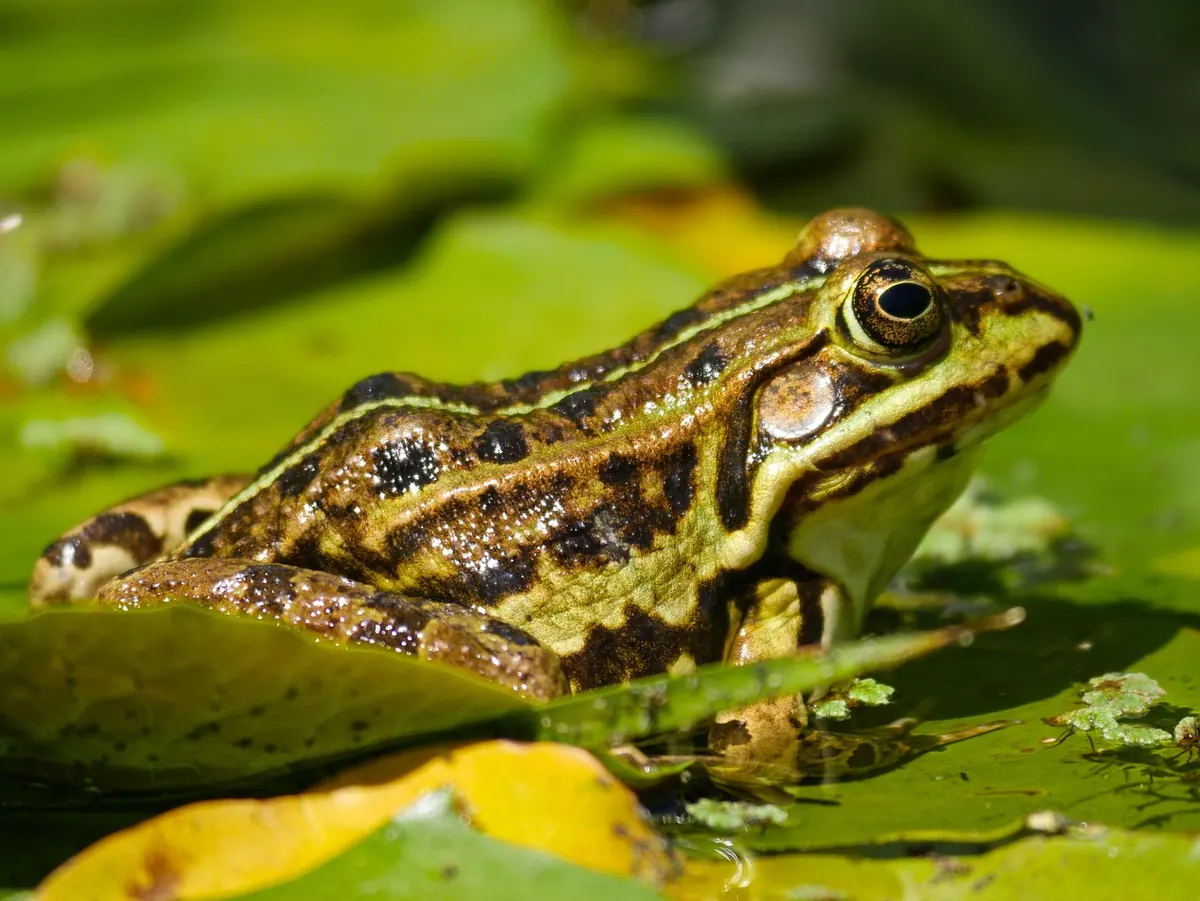
A pond is the most generous thing you can add to a garden. Even a small one — a metre across, sunk into a border — will be found. Frogs arrive, usually within a season or two. So do beetles, pond skaters, damselflies and birds after a drink and a bath. Build it properly once and the wildlife does the rest.
What follows is the order of things: siting, digging, planting, and looking after it.
Where to Put It
Light matters most. Aim for at least half a day of sun: warmth drives plant growth and insect activity, and tadpoles grow faster in warm water.
Keep it clear of big trees. Fallen leaves rot and use up oxygen, and the roots of willows, poplars and conifers can find their way through a liner.
Level ground is easiest. On a slope, dig into the hill and use the spoil to build up the lower edge. Avoid the bottom of a fertilised lawn or a driveway, where nutrients wash in with every storm.
Think about what surrounds it. Frogs and newts need damp cover nearby — a hedge, a shrub, a woodpile — and they move through grass and leaf litter rather than across open paving. Put the pond where you can see it from a window and within reach of a water butt. If there are small children, plan for them: a shallow beach and a fence, or a pond you can supervise from the kitchen.
Shape, Depth and Edges
Bigger is more stable, but small works. A pond about 1.5 by 1 metre, with a centre 60 to 75cm deep, suits frogs, newts, dragonflies and a crowd of smaller insects. The deep section stays cool in summer and shelters amphibians in the coldest weeks.
Sides matter as much as depth. Include a gently sloping beach where birds can stand in a few centimetres of water, a shelf 20 to 30cm down for marginal plants, and a deeper middle for water lilies. Vertical sides trap hedgehogs and frogs, so add a rough plank or a stack of stones as an escape route.
For the lining, butyl or EPDM rubber over a decent underlay will last for decades. A rigid preformed shape is quicker if you would rather not wrestle with a large sheet of rubber.
Hide the edge with turf, moss, stones or low planting rather than paving. And skip the fish: goldfish eat tadpoles and insect larvae and stir up sediment.
Filling It Up and Getting Through the First Summer
Fill in spring so plants have a full season to establish. Rainwater is best. Tap water works for the first fill, though its nutrients feed algae; let it stand for a day or two before planting to let the chlorine dissipate. If your supply is treated with chloramine, a dechlorinator from an aquarium shop will deal with it.
Expect green water in the first summer. It is normal, and it clears as plants grow and shade the surface. Do not reach for an algaecide — it kills the invertebrates you were hoping to attract. A small solar fountain is fine; a powerful pump is not, because it sweeps larvae away.
Planting in Layers
Plant into aquatic baskets filled with loam, not multipurpose compost, which floats and feeds algae. Top each basket with gravel to stop the soil escaping.
Build up three layers in the water, plus the ground around the edge:
- Submerged oxygenators — hornwort, water starwort, curled pondweed — sitting in the deepest zone.
- Floating plants that shade the surface, such as a dwarf water lily in a small pond and native frogbit.
- Marginals along the shelf: marsh marigold, water mint, water forget-me-not, ragged robin and lesser spearwort. In a larger pond, yellow flag iris or bogbean.
- Damp-ground plants for the surroundings: cuckooflower, marsh woundwort, and purple loosestrife if you have room and will keep it in check.
Plant in spring or early summer and do not overdo it; the gaps fill in. Once a third to a half of the surface is covered with floating leaves, algae struggle. Leave one corner as bare mud and shallow stones, because much of the small life will happen there.
Check what is invasive where you live, and never tip pond plants into a river or a wild pond.
The Wildlife Beyond the Water
Amphibians spend most of the year on land and hibernate in cool, damp places rather than in the water. Build a log pile, leave a heap of leaves and stones in a shady corner, and keep a compost heap nearby.
A pebble beach gives birds somewhere to drink and bathe, and a hedge or a patch of native flowers feeds the insects that feed the frogs. Leave seed heads standing over winter and add something night-scented for moths.
Keep slug pellets, insecticides and weedkiller well away from the pond. A poisoned slug is a poisoned frog.
Looking After It Through the Year
A wildlife pond asks for less work than most people expect. The rhythm is roughly this:
- Spring: thin the most vigorous marginals, and lift blanketweed out by hand or on a stick. Leave it on the bank for a few hours so anything tangled in it can crawl back.
- Summer: top up with rainwater in the evening during dry spells, and keep the level steady. Sudden drops strand spawn and larvae.
- Autumn: net or rake out fallen leaves before they sink and rot. Cut back only half the plants and leave the rest standing for overwintering insects.
- Winter: never smash the ice; the shock can harm creatures resting in the mud. Melt a hole by resting a pan of hot water on the surface, or keep a floating ball in the pond so it never seals over.
- Every few years: a bigger clear-out, in stages, in early autumn or late winter. Never empty the whole pond at once, and never in spring or midsummer.
Nothing in a wildlife pond needs feeding. Keep fertiliser and pesticides out of the catchment, and never move spawn, plants or water between ponds — that is how disease and invasive species travel.
Let It Be a Little Scruffy
A tidy pond is a poor pond. Slightly murky water, plants flopping into the margins and long grass at the edge are exactly what frogs, newts and insects are looking for.
Give it two seasons before you judge it. The first year often looks quiet; then one warm evening in spring the water starts to move.
Sit still beside it for ten minutes and you will see more than you expect: a newt surfacing for air, a damselfly laying eggs, a blackbird arriving for a bath. Top it up when it needs it, and otherwise leave it to get on with the job.
Photo: garten-gg / Pixabay