Every spring someone I know ends up with a hot, tingling hand and the same question: is this really worth it? Then they taste the soup. Nettles are one of the most rewarding wild greens a beginner can learn. They appear in ridiculous abundance, they arrive early when almost nothing else is green, and they behave beautifully in a pot. The catch is all in the handling, and that takes about five minutes to master.
Why Nettles Earn Their Place in the Kitchen
Pick a colander of young nettles in April and you have something that cooks like spinach but tastes more interesting — green and faintly savoury, with a cucumber note and a slight bitterness at the finish. They are rich in vitamin A and vitamin C, and they contain calcium and iron, though as with most plant iron your body absorbs it better alongside something acidic or a little vitamin C. A squeeze of lemon in the pot does double duty for flavour and nutrition.
There is also the appeal of sheer volume. One established patch can supply a family for weeks, and it comes back after every cut. Few wild foods are this generous.
Identifying Young Nettles
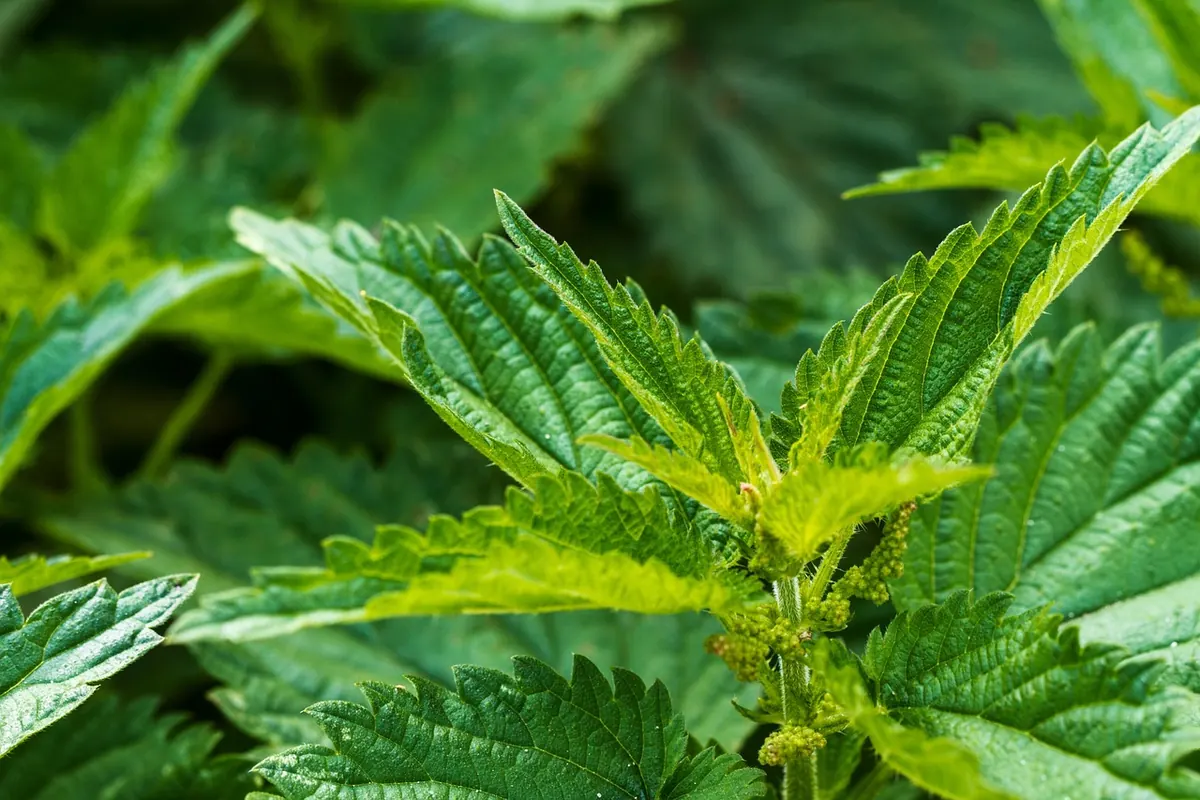
Stinging nettle — Urtica dioica in most of Europe and North America — is a perennial that spreads by underground runners, which is why you usually find it in dense stands rather than as single plants. The leaves grow in opposite pairs along the stem, with toothed edges and a pointed tip, and the whole plant is covered in fine, glassy hairs. The stem is squarish rather than round, and it snaps crisply. Look for nettles along hedge bottoms, riverbanks, old farmyards and anywhere the ground is rich in nitrogen — including the corner of your garden behind the compost heap.
Look-alikes that will not sting you
Several harmless plants resemble nettles closely. White dead-nettle and purple dead-nettle both have nettle-shaped leaves but no sting, plus lipped flowers in whorls around the stem. Henbit and clearweed are other common impostors. None of them will hurt you, but none of them taste like much either. If you are unsure, brush the back of a gloved hand across the leaf and see whether you feel the fine drag of stinging hairs.
Pick them young, and stop when they flower
The best eating is the top few inches of a plant that is roughly six to twelve inches tall, before any flower buds appear. Once nettles flower, the leaves develop gritty mineral deposits and turn tough and coarse. Many foragers stop harvesting for the pot at that point and switch to collecting the seeds instead, which are a pleasant nutty seasoning. A patch that gets mown or cut back often produces a second flush of tender growth in early summer.
Kit and Technique
You do not need much, but you do need the right things:
- Rubber-coated or leather gardening gloves — thin cotton ones are useless
- A pair of scissors or garden snips
- A deep bag, basket or bucket, so cut stems do not spill onto your arms
- Long sleeves, trousers and boots, whatever the weather
- A walking stick to part the patch and check for obstacles
Snip the top two to four pairs of leaves and stem cleanly, leaving at least half of each plant standing so it can regrow and continue feeding insects. Work from the outside of the patch inward rather than wading through the middle. Choose a dry morning after the dew has lifted; wet nettles are heavier, muddier and less pleasant to handle.
Where you pick matters more than how. Skip roadside verges, sprayed hedgerows, field margins beside crops, building sites, and any spot heavily used by dog walkers. If you would not eat a salad grown there, do not eat a nettle from there.
Blanching: How the Sting Disappears
Back home, keep the gloves on until the nettles are in the pot. Rinse them in a sink of cold water, swishing gently and lifting the leaves out rather than pouring the whole lot through a colander, which lets grit settle back on them.
- Bring a large pan of water to a rolling boil.
- Drop the nettles in, in batches, and press them under the water.
- Cook for 30 to 60 seconds, until they turn bright green and collapse.
- Lift them out with tongs into a bowl of very cold water to hold the colour.
- Squeeze out excess water in a clean tea towel, then use or freeze in portions.
Heat and handling destroy the stinging hairs, so blanched nettles are completely safe to touch with bare hands and taste mild. The blanching water makes a decent light stock or a quick cup of tea, though it picks up bitterness from older plants.
Cooking: Soup, Tea and Beyond
Nettle soup
Soften a chopped onion and a leek in butter, add a diced potato, then cover with stock and simmer until the potato falls apart. Add a large bowl of blanched nettles — roughly the same weight as the potato — and cook for two minutes only. Blend, season well, and finish with a spoon of cream and a grating of nutmeg. This is the recipe that converts sceptics.
Nettle tea
Fresh nettle leaves go straight into a teapot; hot water neutralises the sting on contact. Use about a tablespoon of fresh leaves or a teaspoon of dried ones per mug, pour on water just off the boil, cover, and steep for five to ten minutes. The flavour is green and hay-like with a savoury edge. Dried nettles keep their character well in a sealed jar for a year.
Other uses
Blanched nettles work anywhere spinach does. Chop them into omelettes and frittatas, fold them through ricotta for filled pasta, blitz them into pesto with toasted sunflower seeds and hard cheese, or layer them into a filo pie with feta. Dried and crumbled, they make a green powder for winter soups. Thrifty brewers make nettle beer from the tops in spring.
Safety, Stings and Sensible Limits
- Confirm your identification every single time, even at a familiar patch.
- Gloves and long sleeves on. Nettle stings are painful rather than dangerous, but they can swell badly on sensitive skin.
- If you are stung, do not rub the area — that presses more hairs in. Try cooling the skin, pressing on a clean dock or plantain leaf, or lifting hairs off with tape.
- Leave plenty of plants standing. Nettles are a nursery for peacock, small tortoiseshell and red admiral butterflies.
- Check yourself for ticks after pushing through tall growth, and wash your hands before eating.
Nettle is a mild diuretic, so if you are pregnant, taking diuretics, blood thinners or blood-pressure medication, or managing a kidney condition, have a word with a pharmacist or doctor before making it a daily habit.
Start With a Small Bag
Pick a modest amount on your first trip — enough for one pot of soup and one jar of dried leaves. Blanch what you do not use and freeze it flat in bags, and you will have a stash of free greens waiting when the garden is still sulking in February. Gloves, scissors, twenty minutes in May. That is the whole investment.
Photo: NickyPe / Pixabay