Every April the same thing happens: the lawn turns yellow, the mower comes out, and a perfectly good batch of floral syrup gets shredded. Dandelions are one of the first abundant wild foods of the year, and their petals — just the petals — make a golden, honey-like syrup that happens to be completely plant-based. Spread it on sourdough, stir it into tea, drizzle it over pancakes.
The recipe itself is simple. It lives or dies on the harvest. Pick clean flowers and you get a delicate, faintly chamomile-like sweetness. Pick tired ones from a sprayed roadside and you get a bitter, chemical disappointment. So we start outdoors.
First, What You're Actually Making
Dandelion honey isn't honey. No bee is involved, and the name is a bit of a stretch — it's an infused sugar syrup, the same family as mint syrup or lilac sugar. The name stuck because of how it behaves: thick, amber, floral, and perfectly happy sitting on toast next to butter or a vegan spread.
What matters is the flavor. Dandelion petals bring a soft, honeyed floral note with something green and tea-like underneath. Lemon juice, which you're adding anyway to slow crystallization, sharpens it. Real honey often tastes of the meadow it came from. This is the same idea, in a jar you made yourself.
Where to Pick, and Where Never To
The quality of your syrup is decided before the stove is even on. Dandelions grow almost anywhere, which is exactly the problem: the ones growing in the wrong place are the ones you don't want.
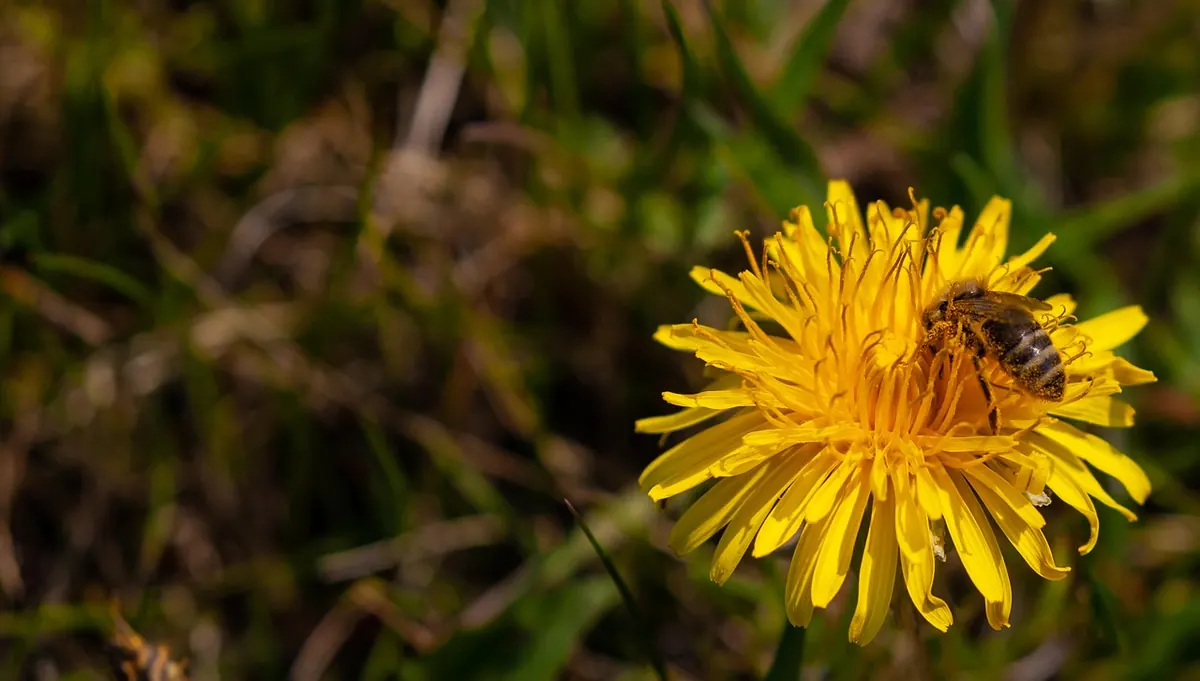
Best spots are your own yard if it hasn't been treated, a friend's garden, an unmowed meadow, a quiet field edge. Pick in late morning or early afternoon on a dry, sunny day, when flowers are fully open and the dew has burned off. Dandelions close in the evening and on grey days, so a cloudy Tuesday pick gives you half the petals and twice the fiddling.
Skip these:
- Roadside verges. Exhaust, tire dust, runoff. Not the flavor you're after.
- Lawns treated with weed-and-feed, or sprayed by a landlord, city, or contractor. If you don't know the history of the ground, ask or walk away.
- Popular dog-walking routes. Use your judgment about what's at nose level.
- Field edges, golf courses, railway corridors. All commonly sprayed, and all surrounded by flowers that look identical to safe ones.
Take only fully open, bright yellow heads. Skip anything faded, brown-edged, or already gone to seed. And never strip a patch bare — leave plenty behind for the bees, who rely on dandelions as one of the first big nectar sources of spring.
Separating the Petals Without Losing Your Mind
Here's the part nobody mentions: the green bits are bitter. The base of the flower head and the hollow stem carry a milky, astringent sap that will make your syrup taste like a lawn. You want petals only, with as little green as you can manage.
The technique that works: hold a flower head between thumb and forefinger, pinch the base firmly, and pull or twist the petals free with your other hand. They slide out in a bundle. Or snip the green base off with small scissors or a thumbnail and rub the petals loose over a bowl. Do it sitting down with a friend and something to listen to. It takes longer than you think.
Depending on flower size, you may need a few hundred heads for the two packed cups of petals this recipe calls for. Plan on picking more than you think you need, then pick a handful extra.
Tip: spread the petals on a tea towel for a few minutes before you start. Any small insects that came in with the flowers will walk out on their own.
The Recipe
This makes about two cups of syrup, or enough for a few small jars.
Ingredients
- 2 packed cups fresh dandelion petals, no green
- 2 cups water
- 2 cups white sugar, or 1½ cups for a looser, more pourable syrup
- Juice of half a lemon, plus a strip of zest if you like
- Optional: a splash of vanilla, a pinch of salt, or a few dried chamomile flowers for a rounder flavor
Method
- Bring the water to a boil in a heavy saucepan, add the petals, and stir. Cover, lower the heat, and simmer gently for 10 minutes.
- Pull the pan off the heat and let it steep, covered, for at least an hour. Four hours, or overnight in the fridge, gives a noticeably stronger syrup.
- Strain through a fine sieve lined with cheesecloth or a clean tea towel. Press the petals with the back of a spoon to get every drop, then discard the pulp.
- Return the infused liquid to the pan with the sugar and lemon juice. Warm over medium heat, stirring until the sugar dissolves completely.
- Simmer without stirring for 15 to 25 minutes, until the syrup coats the back of a spoon and drips off slowly. Skim any foam.
- To test, spoon a little onto a chilled plate. It should cool to a soft, honey-like consistency. It firms up further as it sits, so pull it early rather than late.
- Pour into clean, hot jars, seal, and refrigerate once cool.
Fixing Texture Problems
Too thin? Simmer it longer, five minutes at a time. Too thick, or setting like jelly? Stir in hot water a spoonful at a time. Crystals forming in the jar? Normal for sugar syrup; the lemon helps delay it, and a warm water bath will reliquefy an older jar. Bitter? Green got in. Nothing to do but label that batch for tea rather than toast and pick more carefully next spring.
Ways to Use It
Think of it as a floral syrup with honey habits:
- On toast, scones, or cornbread, with or without vegan butter
- Stirred into black tea, chamomile, or hot water with lemon
- Drizzled over pancakes, waffles, or porridge
- Spooned over yogurt or coconut yogurt with toasted oats
- Whisked into a vinaigrette with mustard and cider vinegar
- Brushed onto roasted carrots or squash near the end of cooking
- Swirled into cocktails, or stirred into a hot drink in place of honey
Storing It, and a Few Honest Notes
Keep the jars in the fridge, where they'll last several weeks, or longer if you process them in a water bath. Since there's no honey involved, this is a straight sugar syrup: none of the infant-related concerns that apply to real honey, but also no preservative magic. If a jar smells off, grows fuzz, or tastes fermented, tip it out and try again next spring.
One caution worth taking seriously: dandelions belong to the daisy family, and people with ragweed, chrysanthemum, or other daisy-family allergies sometimes react to the pollen and sap. Start with a small spoonful. If you have a health condition, take medication, or plan to make wild plants a regular part of your diet, check with a qualified professional before relying on them.
Finally, be a decent forager. Pick where you have permission, pick away from traffic and spray, and leave most of the yellow standing. The bees get their spring, next April's lawn comes back, and you get syrup either way.
Photo: suju-foto / Pixabay