Wild blackberries are one of the few genuinely free foods left in most temperate places. They shove up through fence lines, sprawl across cut-over ground, and hang over the edges of quiet lanes from midsummer into early autumn. They also grow in some of the worst spots you could choose to eat from, tangled with poison ivy and sprayed by whoever maintains the roadside. The difference between a good afternoon and a bad one comes down to a few habits: knowing when a berry is actually ripe, reading the ground before you reach in, and picking so the patch is still there next year.
How to Tell a Ripe Blackberry From a Sour One
Blackberries ripen a few at a time over several weeks, not in one clean flush. That is good news. A patch worth visiting once is worth visiting four or five times.
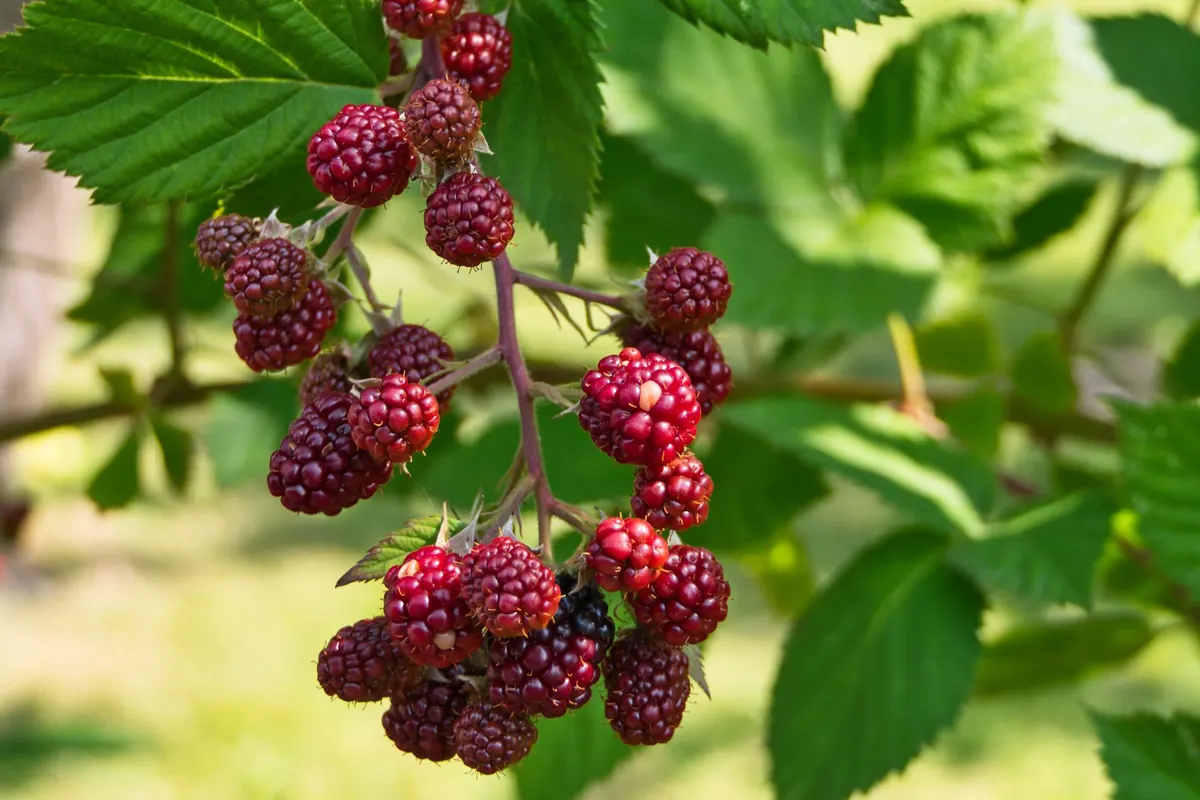
A ripe berry is dull, deep black, and gives way with almost no resistance. Cup it and roll it gently with your fingertips; if it lets go and drops into your palm, it is ready. Berries still holding tight to the cane are usually red, purple, or hard and shiny black — underripe, mouth-puckering, and not worth the scratches. They will not ripen much once picked, so leave them.
Taste is the final test, and it belongs at the start of the session, not the end. Eat the first good-looking berry you find. If it is sharp, wait a few days and come back.
Two quick distinctions are worth learning. If the berry pulls off leaving a hollow cap and a pale core still stuck to the plant, you have found a black raspberry. If the small white core comes away inside the berry, it is a blackberry or dewberry. Dewberries trail along the ground; blackberries arch up on stiff, thorny canes. Both are excellent eating.
Pick when the canes are dry. Wet berries crush and mold fast, and a dewy morning means wet sleeves. Fruit picked in the cool of the morning holds its shape better; fruit picked in the afternoon heat is softer and sweeter and should be eaten or processed that day.
Read the Ground Before You Reach In
The best patches are usually the boring ones: old hedgerows, woodland edges, neglected pasture, land cleared a few years back. Brambles love disturbed ground and full sun, which is also why they turn up in places you should not eat from.
Walk away from a patch if it falls into any of these:
- Roadside within a few metres of fast traffic. Dust, exhaust, and runoff all land on the fruit.
- Field edges next to cropland. Spraying schedules change; if you do not know the farmer, ask before you pick.
- Railroad rights-of-way and utility corridors. These are routinely cleared with herbicide.
- Old industrial ground, dumping sites, and ash piles. Not the place for a snack.
- Anywhere the vegetation looks wrong — a stripe of dead brown weeds in an otherwise green patch, or fresh spraying signs.
- Land you do not have permission to be on. Rules for public land vary widely, so check with the land manager or park office first. A quick email saves an awkward conversation.
One more practical point: berries growing at nose height along a popular dog-walking path have been visited by every dog on that path. Wash everything before it goes in your mouth, and cook anything you are unsure about. If you are pregnant, immunocompromised, or simply uncertain about eating wild food raw, talk it over with a healthcare professional.
Leaves of Three: Finding Poison Ivy in a Bramble Patch
Poison ivy thrives in exactly the same sunny edges as blackberries, and it often threads right through the canes as a vine. The classic rule holds: three leaflets, let it be. The leaflets are pointed, often glossy when young, and can be smooth-edged or notched. Older vines are the real trap — they look like fuzzy brown rope climbing a trunk, and the hairy aerial roots carry the same oil as the leaves.
That oil, urushiol, is present year-round, on stems and roots as well as leaves. It also lingers on fabric, gloves, and tool handles, so a pair of gloves that brushed a vine can cause a rash days later. Long sleeves, trousers, boots, and leather gloves are not overkill in a bramble patch. Keep your hands away from your face, and if you think you have made contact, wash promptly with soap and cool water, then wash your gear. If a rash develops, spreads, or appears near your face, see a healthcare professional — this is general advice, not medical guidance.
Never burn brambles or brush you have pulled. Smoke carrying urushiol is a serious hazard to the lungs.
Picking So the Patch Comes Back
Blackberry canes are biennial. A first-year cane only grows leaves; it flowers and fruits in its second year, then dies back. Every cane you shred today is one less fruiting cane next season. A little care goes a long way.
- Set your feet before your hands. Stand on solid ground at the edge of the thicket. Do not wade into the middle of a bramble.
- Part the canes, don't pull them. Lift a branch with your free hand, or use a walking stick or closed pruners to push canes aside.
- Pick berry by berry. Roll each one gently and let it fall into your palm. Yanking takes leaves, unripe fruit, and sometimes a whole tip with it.
- Leave the red and purple ones. They are next week's harvest and next week's flavor.
- Snip, don't snap. If a cane genuinely blocks your path, cut it cleanly near the base with pruners. Fruiting canes die back after harvest anyway, and thinning the tangle lets light in.
- Watch your weight at the base. The crown and any tip-rooted new canes are next year's plants. Trampling them costs you the patch.
What to Carry and What to Do With the Haul
A shallow bucket or wide tub beats a deep pail, which crushes the bottom layer under the weight of everything above it. Beyond that:
- Long sleeves, trousers, closed boots, and gloves — leather if poison ivy is anywhere nearby.
- A light stick or pruners for parting canes.
- Water and soap for your hands, plus a mirror or a friend to check for ticks afterward.
- Someone who knows where you went. Phone signal in a bramble thicket is not a plan.
Keep the fruit in the shade while you pick, then refrigerate it within a couple of hours, spread shallowly on a tray rather than heaped in a bag. Do not wash the berries until you are ready to use them — moisture is what turns a good haul into mush. A brief soak in lightly salted water is a common field trick for coaxing out any small larvae, followed by a rinse. After that, freeze them on a tray and bag them, or cook them into jam, vinegar, or a crumble. Discard anything mushy, fermented-smelling, or bruised beyond recognition.
Start With One Patch
Choose a single accessible patch and visit it weekly through the season. Bring a smaller container than you think you need the first time; blackberries reward restraint, and you can always go back in three days when the next wave is ripe. Notice which canes fruit heaviest, and write down the dates. Within a season you will know that patch better than any guide can describe it, and you will have the scratches to prove it — a fair trade for a few kilos of fruit that cost nothing but attention.
Photo: Joerg Hartmann / Pexels